Our History


Our History
Women on the Border was founded in 2001 to support the empowerment of women working in the foreign-owned factories known as maquiladoras at the U.S.-Mexico border.
Twenty years later we remain allies of the working women who organize for workplace justice as volunteers in the Comité Fronterizo de Obreras (the CFO).
Our primary goal was to educate the public about the widespread examples of sexist and racist treatment of women in the maquiladoras.
By the late 1990s, the more we began to hear about what was happening to women, how they were harassed, exploited, exposed to toxic chemicals, how they could barely feed a family on terrible wages, or how organizers for reform were blacklisted in retaliation, the more it was clear that American consumers should know that outsourcing under NAFTA had not produced better living conditions for workers on either side of the border.

WOMEN ON THE BORDER INCORPORATES ON JANUARY 18, 2001.

The mission statement declared an intent to support the training and empowerment of women working in the border factories called “maquiladoras” which began appearing in the early 1990s under the North American Free Trade Agreement. These factories, called sweatshops by labor activists, expanded cross-border trade dating back to the 1965 Border Industrialization Program.
Gender in the Maquiladora Industries

As NAFTA companies expanded their presence at the Mexican border throughout the 1990’s, competitive production levels had their impact on the working women. The Mexican sociologist Norma Iglesias Prieto had published a study of the maquiladora industries revealing disturbing patterns of the sexist and racist treatment of women working under the 1965 Border Industrialization Program. Those gendered issues and problems worsened under NAFTA.
A 1999 report by the women of the Comite Fronterizo de Obreras entitled Six Years Of NAFTA detailed among other issues, high levels of stress for the workers from having to meet impossible quotas, sexist treatment and sexual harassment from line supervisors, chronic illnesses linked to their exposure to toxic materials, pregnancy discrimination, wage theft and retaliation against workers seeking to improve wages and working conditions.
Our History
Impact of NAFTA
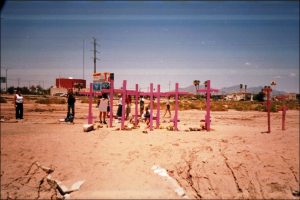
NAFTA introduced tremendous economic activity and with it social disruption. A deregulatory environment led to an environment unconcerned with the quality of workers’ conditions, homes and basic safety. 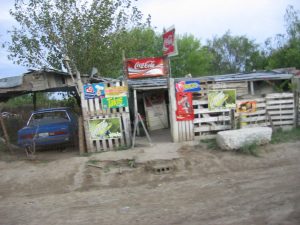 A pattern of gender violence, known as femicides, took hold in major industrial centers like Ciudad Juarez. In 2020, there are still examples of women and girls murdered just for being female.

Social Justice Education
 In 2017 the Board of Directors expanded the mission to commit to social justice education following the horrific evidence of inhumane, illegal and unconstitutional treatment of migrants, children, undocumented immigrants, DACA residents and asylum seekers.
